
Blueprint Games Fall 2026
Your Tasktask
Today, youyou'll willwork assume the role ofas a Blueprint project team member.member Youto andplan software for Open Referral. With your team will work together toteam, define projectthe project's goals, deliverables, and features for a nonprofit,features, assuming you14 haveweeks, tenor weeksone semester, to implementbuild your plan.it.
Don'You won't worry — you won’t be writing anywrite code todaytoday.. Instead, yourYour team will focusdiscuss onthe understanding and discussing productproject's needs, outliningchoose keywhich features,features planningto high-levelprioritize, outline user flows, and modelingsketch yourthe initialdata databasethe system needs.
✨ If youYou don't need to understand every parttechnical ofterm thebefore prompt,you that's okay.start. Ask your teamteammates members (andor E-Board)Board for help!help, Thisand exercisetalk isthrough asyour muchideas together. We're interested in how you collaborate and break down the problem.
Meet the project partner
Open Referral
Project summary
Open Referral partnered with Stevens Blueprint to upgrade the HSDS Transformer, a tool that converts resource directory data into the Human Services Data Specification, or HSDS, format. HSDS provides a shared structure for information about yourservices, abilityincluding totheir collaboratelocations asand itaccessibility, isso aboutdifferent yoursystems abilitycan toexchange workthat towards completing a technical task.information.
🥁 Drumroll… Introducing the nonprofit you’ll be working with today…
Go Project NYC
The GOproject's Projectobjective helpswas Newto Yorksupport CityHSDS public3.0 schooland studentsmake thriveit easier to convert data from other formats into standardized output. Today, you'll use that project as the basis for your own plan.
The challenge
Different organizations maintain resource directories in theseparate earliestsystems. stagesThose ofdirectories often contain overlapping information, but their educationformats throughdon't year-round academic, social-emotional, and family support.
New York City is the largest public school system in the country – and nearly half of all students are behind grade level in reading or math. Many NYC public schools and families with limited resources do not have the opportunity to provide individualized support to every student who needs it. And when students fall behind academically, their learning gaps grow wider over time,match, making it increasingly difficult to catch up without intervention.
As Go Project grows, executives have found it difficult to organizeshare data or keep it consistent across systems.
HSDS gives those systems a common format, but adopting it takes work. Someone must understand how their data is organized, map its fields to HSDS, and trackrun studentthe transformation. That process can be especially difficult for people who know the service information well but have limited technical skills or time.
The objective
Plan a process that helps people:
Validation checks whether the output follows the standard. Documentation and examples should help someone repeat the process with their own data.
A user-friendly interface for nontechnical users is a stretch goal. Decide what your team can deliver within 14 weeks and which improvements you would leave for later.
Questions to guide your plan
Use these questions to guide your decisions:
User personas
Consider three types of users with different skills and needs:
Skyler, a data admin. Skyler manages data flows and databases, has advanced data skills, and can use a command-line interface. He wants to retrieve data through an API and run transformations regularly as part of a data pipeline. He needs a repeatable process that fits into existing systems.
Sasha, a professional content manager. Sasha knows the service information and can organize data and create a custommapping GOin Projecta NYCspreadsheet. software.She Theirhas requestsintermediate are:
a
Sheila, grades,a academicvolunteer progress,or aspart-time wellcontent asmanager. social-behavioralSheila skillknows development.the
data management. She needs guidance to map her data to HSDS, load it, and run the transformation. The Goal
process should let her use her knowledge of the services without requiring software development skills.
✨Decide Whenwhich creatingpersonas your software,proposed considertool thewill followingsupport questions:
How can we leverage technology to alleviate the need for manual trackingfirst and scheduling?explain how their needs affect your choices.
How can we leverage technology to ensure student success within the program?
The Users
Getting started
When Blueprint partnersworks with a nonprofit,project they describepartner, the challengepartner they’redescribes facing,the challenge, and we’rethe freeteam toworks decideout how to tackleaddress it. Today, you’reyou'll inmake Blueprint’sthose place.decisions. HowStart youwith the summary, challenge, objective, and user personas above.
Your team can choose toits approachapproach, thisbut promptbe is entirely upready to you andexplain your team.reasoning. JustDifferent makesolutions surehave you can provide solid justifications for your decisions. There’s no right answer—everything hasdifferent tradeoffs. ForPlan thisfor a project youyour team can assumecomplete that you havein 14 weeks (1 semester to complete it).weeks.
Here are some
Discuss questions tosuch get you started.
- Would a website, command-line tool, API, or a combination best meet these needs?
When you’you're readyready, tomake geta started,copy duplicateof thisthe Googleteam Docdesign document template and share it with your team members.teammates. The doctemplate contains a fewincludes tips onfor how to taketaking notes.
Deliverables
🌟 You will not be asked to present your final deliverables. We are more interested in seeing how you go about understanding and breaking down the problem than any polished final result.
Document any thoughts, drawings, or features as you work! At the end, you will submit everything your team has come up with.
That said, we aren't looking to see a beautiful polished design doc — we're most interested in your process, so feel free to include in-progress work and notes, and don't fret about the formatting.
Your team will submit theits design docdocument (createdat earlier)the whichend canof includethe anyexercise. artifactsYou won't give a presentation.
Keep your notes as you creatework. orInclude useideas throughoutyou thisconsidered, process.questions Thisyou couldn't answer, and reasons for your decisions. Rough sketches and unfinished work are welcome. We care more about your process than polished formatting.
Your document can include:
- User
Stories
stories that describe what someone needs to do and why. - A
Listlist ofKeykeyFeaturesfeatures and their priorities. - User
FlowflowDiagramsdiagrams-that show how someone completes a task.
If you create diagrams or wireframes in another tool, include screenshots ifin youyour makedocument.
These are examples of useful artifacts, not a requirement to finish every item. Submit what your team develops, including work in aprogress.
Appendix
Use
User
Appendix
diagrams
User Flow Diagram: A visual diagram that describes the steps a software system takes when a user performs performs certain actions. There can be multiple user flows, which might call for multiple diagrams or variations of diagrams. For example, say your website requires users to create an account and login. A user flow diagram forshows the steps someone takes to complete a task and how the system responds. For example, a login processflow wouldmight lookshow somethingsomeone likeentering this:
their credentials, the system checking them, and the person either reaching their account or receiving an error.
You may need separate diagrams for different tasks or account types.
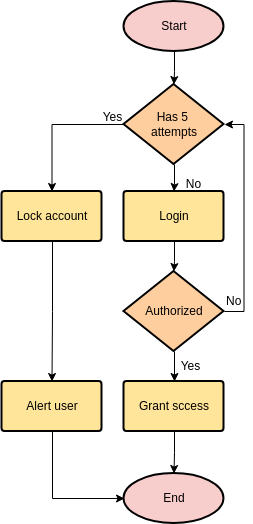
EachCommon symbolsymbols means something different in a user flow diagram.include:
- Ovals
representfor the start and end of auser flowflow. - Rectangles
representfor actionsthattaken by auserperson or the system.
- Ovals
Application programming interfaces
An application programming interface, or API, lets software communicate with other software. In a web application, the frontend can takeuse API endpoints to request data from the server or actionsask it to make changes.
An endpoint combines an address with an HTTP method that the system will perform
Application Programming Interface (API):operation.
RestfulFor APIexample, manage the state of your application. Let's say in youran application youthat are dealing with a set of members. You need a way to bridge your frontend application with your server. We do this through API endpoints. Each endpoint defines the actions to be executed on a given resource. For instance, if you wanted to get a list of all yourmanages members themight followinguse:
GET /api/v1/members
Now if you wanted to get
GET /api/v1/members/{id}
Retrieve one member by ID.
POST /api/v1/members
Create a member.
PUT /api/v1/members/{id}
Replace a member's editable information.
PATCH /api/v1/members/{id}
Update selected fields for a member.
DELETE /api/v1/members/{id}
Delete a member.
The {id} placeholder represents the ID of a particular member.
To create a member you need to usemember, the frontend could send a POST request action and in the body of thepasswith thea attributesJSON of the memberbody:
POST /api/v1/members
body
{
  id: "190ecfba-c6af-4639-af92-f94ad16ecb4a"
   name:name": "John Doe"
   team:,
  "Marketing"teamId": "team-123"
}
ToThe updateserver acould assign the new member youan canID usewhen it saves the PUTrecord.
To change only the member's team, the frontend could send:
PUTPATCH /api/v1/members/{id}
{
  "teamId": "team-456"
}
TheTo bodyretrieve members of the request will be a JSONparticular will allteam, the attributesapplication youcould want to change.
Now, you can be more explicit with the behavior of the response of the endpoints. For instance, if you wanted to retrieve the members that belong to certain teamId, you can do the followinguse:
GET /api/v1/members/teams/{teamId}/members
InGET requests read data. Methods such as POST, PUT, PATCH, and DELETE request changes.
For this exercise, you only need to describe the endpoints your system might need and what they do. You don't need to implement them.
Database schemas
A database schema describes the information a nutshell,system endpointsstores and its corresponding action (GET, POST, PUT, DELETE) represent a change in the state of a resource, such a team, members, etc.
Database Schema:
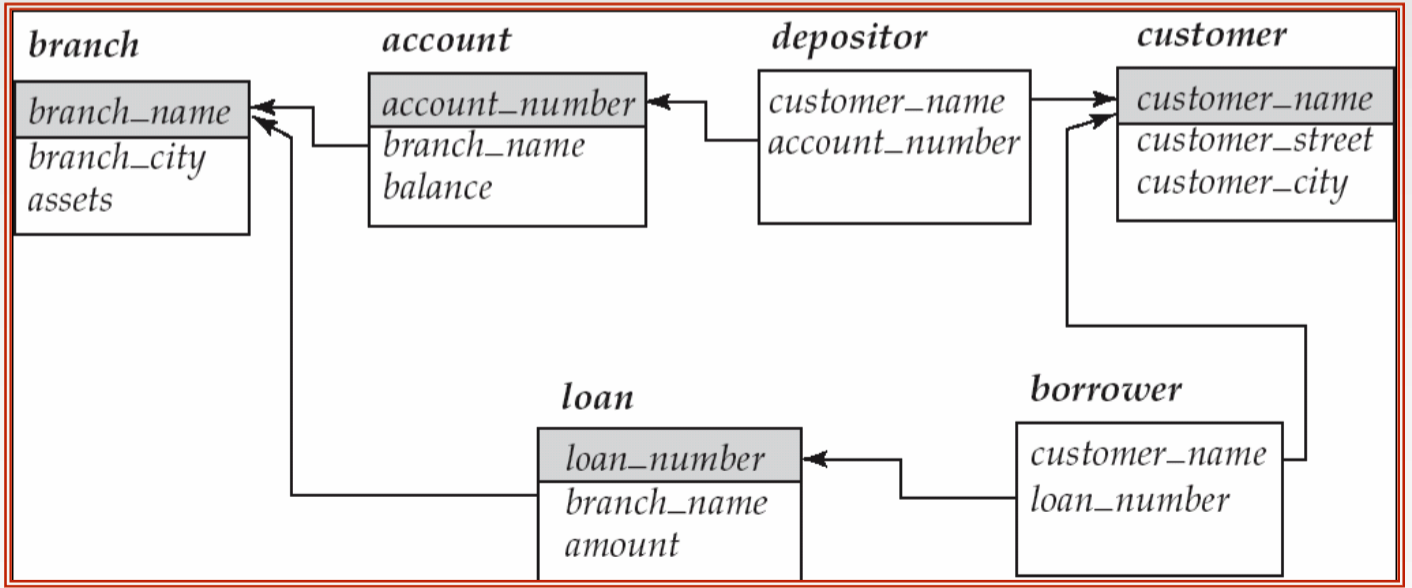
SQL databases let us establish relationships between entities. For instance, a member might be related to a Team, and Team might be related to a list of members. In total, we can define 4 types of relationships: OneToOne, OneToMany, ManyToOne, ManyToMany. The way we declare this relationships is through foreign_keys.
We are looking for a simple Database Schema that defines the relationships between records.
For example, an application might store teams and members. If each member belongs to one team, the entities,schema wecould dolook notlike expectthis:
Team
- id: primary key
- name

Member
- id: primary key
- name
- team_id: foreign key referencing Team.id
A primary key uniquely identifies a record. A foreign key references a record in another table.
In this example, one team can have many members, and each member belongs to one team. That's a one-to-many relationship when viewed from the team, and a many-to-one relationship when viewed from a member.
Other relationships include:
In a relational database, a many-to-many relationship usually uses a connecting table. A table called ServiceLocation, for example, could connect a service ID to a location ID.
For this exercise, list the records, fields, and relationships your system needs. A diagram or a plain-text outline is enough. You don't need to write SQLSQL, commandsand your team can decide whether the Transformer needs a database or such.can Forprocess instance,files thewithout dbstoring schema of the diagram shown above would be the followingthem.
1. branch
branch_name (PK)
branch_city
assets

2. account
account_number (PK)
branch_name (FK references branch(branch_name))
balance

3. customer
customer_name (PK)
customer_street
customer_city

4. loan
loan_number (PK)
branch_name (FK references branch(branch_name))
amount

5. depositor
customer_name (PK, FK references customer(customer_name))
account_number (PK, FK references account(account_number))

6. borrower
customer_name (PK, FK references customer(customer_name))
loan_number (PK, FK references loan(loan_number))
Tips
HelpfulA process to go about designing appstry
WhatIdentify the most important tasks each type of user needs to complete.
UnderstandingKeep the endusers userin mind
As you make decisions, consider:
HowCancansomeoneweunderstandbuild in a way that creates an app that is accessible, simplewhat touse,doandwithouteasytraining?
Good
Talk luck!through 🙆disagreements,
record your assumptions, and ask for help when you get stuck. Your notes should show how your team reached its decisions.